Malala was still in a coma when the world decided who she was. Flown from Pakistan to a specialist trauma centre in Birmingham after she was shot by the Taliban aged 15, she remembers the day she woke up living someone else’s life. “People were describing me as a saint and a hero, the bravest girl in the world. I was receiving titles and being asked to give speeches. I was on this trajectory, totally defined by what had happened to me – and I decided to embrace it,” she says. She had become a mononym overnight, but there were always more sides to Malala. And now she’s ready to show them.
Growing up among the lakes and lush forests of the Swat Valley, young Malala was a troublemaker. She spoke up for her right to education as the Taliban tightened their grip on her hometown, but she also spent her time at school passing notes and ferrying gossip between groups of girls. At home, she’d watch her favourite wrestler, John Cena, on TV, then try out his moves on her little brothers. She was “messy and rambunctious”, she says, prone to climbing trees and crying when her classmates got better grades. So, when the world’s spotlight turned on her, she was uncomfortable with the halo it cast. “I felt a part of me had been left behind in Pakistan. That funny, mischievous girl was gone – and this new me was all about activism. I wanted to use the platform I had to make girls’ lives better, but I sometimes wonder how that girl carried it all.”

That version of herself still lived quietly in the background, even as a more serious, public-facing Malala stepped forward. From signing the papers to establish the Malala Fund, a nonprofit organisation dedicated to securing girls’ education worldwide, to becoming the youngest-ever Nobel Peace Prize laureate at 17, her advocacy has made her a changemaker world leaders still clamour to meet, 13 years later. She’s addressed the UN, had an audience with the Queen and, as a film producer with her company Extracurricular and guest editor of Service95 this week, she remains committed to spotlighting stories that too often go unheard. Yet in some ways, that global spotlight trapped her in amber – a girl activist never quite given the space to mess up, experiment and figure out who she truly wanted to be.
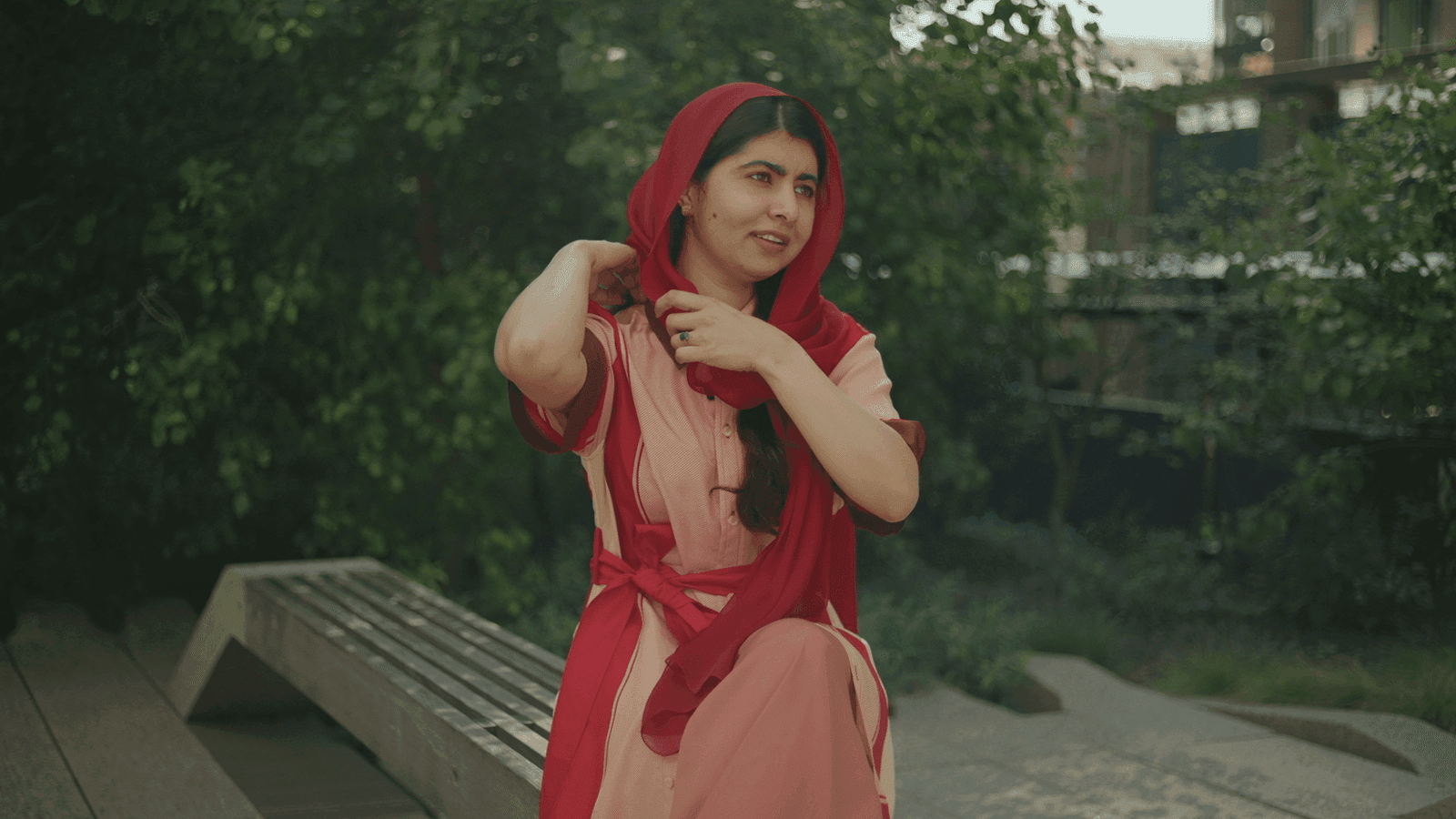
It’s only now, aged 28 and putting out her first memoir entirely in her own words, that Malala feels like “a whole person”. Finding My Way is her honest account of how she came back to herself, and how her years as a philosophy, politics and economics student at Oxford were the ones that broke and remade her. When we meet, her hair falls in loose waves over a Breton top, her face amused and attentive – a far cry from the solemn girl we used to see behind podiums. “I worried that sharing my lowest moments and all the silly things I did at college would damage the image people have of me,” she says. “But then I realised that we need true stories of activism; not this false picture that activists are perfect and have it all figured out.”

When Malala arrived at her Oxford college, Lady Margaret Hall – chosen not, as many assumed, because Pakistan’s first female prime minister Benazir Bhutto had studied there, but because the riverside grounds reminded her of home – she felt a rush of freedom. She smiles softly as she recalls testing new boundaries while her government-assigned security slept in the dorm next door. “It was the first time I didn’t have my parents watching me and I had time away from work, and it was like reliving my childhood,” she says. “Everything was exciting; I signed up for every society and club, ate my first McDonald’s, danced to Cardi B. I stayed up chatting for hours with friends about boys and star signs. I also started climbing up to the rooftop of the LMH building in the middle of the night to look out over the campus. It gave me such a sense of peace.” In her book, she details the sting of catching feelings and trying to ‘save’ the local bad boy, only to have him ghost her. In one way or another, we’ve all been there.

Academic life tested her limits in new ways, and she pulled many chai-fuelled all-nighters, she admits, to meet deadlines. The workload was challenging, but it also wasn’t her priority; she was more interested in the lessons she was learning about herself in her social life. “If I were to choose one thing that changed me as a person, it would be my friends,” she says emphatically. “Through them, I grew emotionally and reconnected with myself. I could be silly, I didn’t have to say everything perfectly, I could express an opinion and they’d help me see things differently. And in all of that, there was no expectation, no judgement.” In her memoir, she sums it up better than I ever could: After a lifetime of brothers, sisterhood felt like going to a foreign country and discovering I somehow already knew the language.
One of her most transformative moments, however, came the night she decided to hit the club. “It was an Eighties aerobics themed night, and I didn’t even know what that meant. My friends had to dress me up, putting me in a yellow shirt and big hoop earrings. I actually looked cool,” she laughs. “I just loved being there. I loved dancing, I loved watching my friends having the best time. And I was so happy I’d done it, because in the beginning I was worried that if I showed up at a club, people would take photos and it would become this whole controversy in Pakistan.” She pulls a mock-horror face, recalling the onslaught of criticism and calls to her family sparked by a shot of her wearing jeans someone posted online.
This wasn’t regular trolling: the fact she wasn’t in her usual shalwar kameez had thousands of people calling her a ‘traitor’ and a ‘pornstar’ who had abandoned her Pashtun roots. “Part of me gets it; I want to embrace my culture while still promoting women’s rights, because I challenge the concept that equality is all about living a Western life,” she says. “But it also bothers me, because men are not held to the same standard.” After that particular drama, she decided to stop letting the court of public opinion dictate her choices. “If people have a problem with my jeans, they’re going to have a problem with everything. Like, what’s next? ‘Malala is breathing?’”
“I want to embrace my culture while still promoting women’s rights, because I challenge the concept that equality is all about living a Western life. But it also bothers me, because men are not held to the same standard”
Her sharp wit is a crutch, she admits, but it hasn’t always worked. “Before I wrote my memoir, if people asked me about my early twenties I would have made some joke, but looking over my journals, I realised how often I was feeling either extreme sadness or anxiety,” she admits.
During her second university year, Malala began having flashbacks of the attack on her life – a terrifying revelation, as she had no prior memory of the trauma. She withdrew from friends, retreating to her room to endure panic attacks alone, until someone urged her to see a therapist. In their very first session, the possibility of PTSD was raised. “It threw me. How could I be called brave when I was getting triggered by small things and feeling scared all the time,” she says. “But it taught me that I really had to start looking after myself. Resting properly, eating well and getting into sport all helped my mental health. And I still see a therapist, because I do not want to go back to that place.”
Another big part of her transformation, she says, was down to falling in love. She’s far from gushing, though; every cell in her body balked at her growing feelings for her friend Asser Malik, who she met in 2018 at a go-karting track on a rare day off. “If my friendships made me stronger, love was the complete opposite at first. When you start loving a person they are everything to you, and it makes you so vulnerable. I felt like I had lost a battle.” Asser was looking for a life partner, but Malala “hated the idea of marriage, because the marriages I saw growing up meant the woman giving up her future and her autonomy,” she says. “I had to be sure that this man would respect me and understand my fears.”

In the end, Asser proved himself to be the one for her time and again, expressing his willingness to wait until she felt ready for a relationship and winning over her parents. They married in 2021, and she calls him her soulmate. “He’s helped me to love myself, look after myself and love my work even more,” she says. “I always found it hard to express my needs or say no, but Asser can see when I’m exhausted. He’ll say, ‘We’re taking a break, we’re going to this restaurant, we’re going to the gym,’ and, ultimately, it means I have more to give.”
A cricket executive with a love of all sports, Asser’s passion has rubbed off on Malala – maybe more than he bargained for. “We play golf, badminton and cricket, and I’m really competitive. I’ve also become a bit of a gym bro. Women tend to have stronger lower bodies, and the moment I lift a heavier weight than Asser and I see the look on his face, it is the greatest joy,” she laughs. The two put their heads together to launch Recess Capital in June, an initiative to improve gender equity in sport. Their approach is two-pronged: increase visibility and investment in world-class leagues and teams, and level the playing field for every girl who shows an interest in sport. “Helping girls get access to equal opportunities is my lifelong mission, and this has been another way to do it. I want them to be out there, kicking a ball at recess, inspired to try anything they want to try,” she says.

Despite the myriad ways she’s changed over the last few years, Malala has never been more focused on her purpose. “Right now my attention is on the ban on girls’ education in Afghanistan; in four years the Taliban have issued more than 100 decrees and edicts and the majority of them are about restricting women,” she says. “It’s been difficult to grasp the reality that the Taliban are back in power, and while I’m out speaking and advocating I stay very strong. But when I’m back in my room, alone, I can feel the anxiety and the panic attacks coming back.” Part of maturing, she says, has been learning to hold the heaviness of her work alongside the things that bring her peace: going for a walk with a matcha or setting down a picnic blanket and escaping into a book (the most recent being A Court Of Thorns And Roses, if you’re interested).
The bleakness can still rear its head, but when she speaks to girls on the ground who still have hope for a better world, it reminds her there’s no room for hopelessness among the rest of us. “Internet access has just been limited there and it should be a wake-up call. We have to stand with Afghan women and girls, and world leaders who proudly say they’re committed to gender equality cannot continue to do nothing while millions of women are systemically oppressed.”

There is fire in her eyes; a flame of determination to stand up to injustice that has been burning since she was a child. She may have grown in every way, failed and floundered and dug into the lowest depths of herself to find out who she is, but she will always be this: a voice for the people who need her. “My story started as one girl being shot for standing up for education, then I became the girl activist,” she says. “But I’m a woman now, and it’s about what sort of legacy I leave for the future generations of girls out there. It was never about me; it was, and always will be, about them.” How lucky we all are, to live in the age of Malala.
Finding My Way by Malala Yousafzai is out 21 October