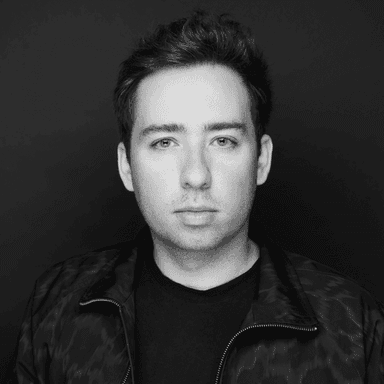
It didn’t take long for Kyiv-based DJ Seba Korecky to adapt to playing in daylight. With military curfews now defining the rhythm of Ukraine’s capital city, the all-night techno marathons that once pulsed through its underground scene have become a thing of the past. “Despite the fact we can’t hold events at night, or even just be outside, as strange as that might sound, I actually like it,” he explains. “Finally, I can get some proper sleep and I’m not spending the next day recovering.”

Since Russia’s full-scale invasion began in February 2022, every layer of Ukrainian life has been upended – including its once-celebrated nightlife. Kyiv, long revered as Eastern Europe’s rave capital, now falls still from midnight to 5am: its dance floors cleared; its clubs shuttered by law; with only the low hum of generators and the distant wail of sirens cutting through the silence.
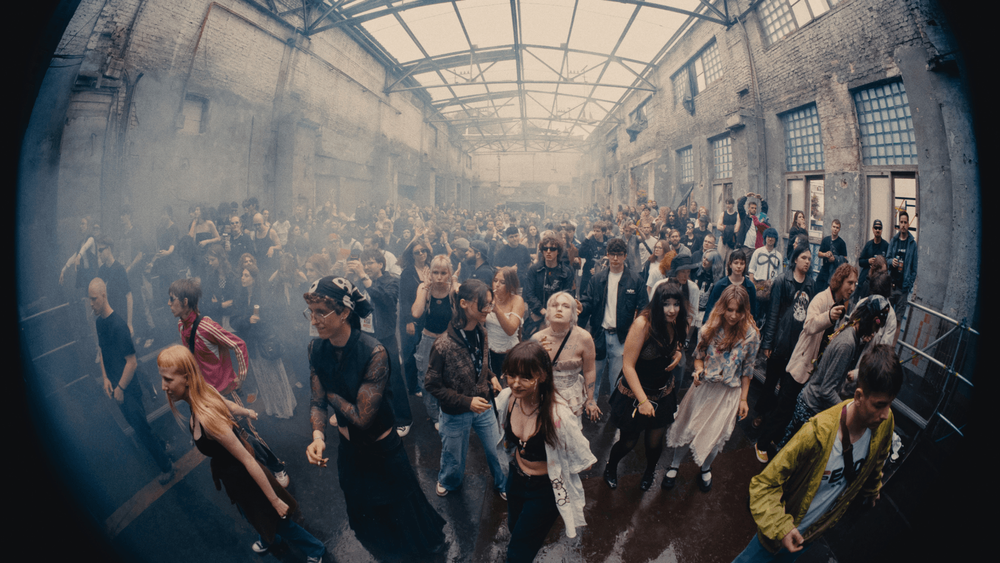
Yet the spirit of its nightlife endures. International DJs and artists have long been drawn to Kyiv’s underground clubs, thanks to their reputation as platforms for creative freedom. It’s also been where homegrown talent was given space to push boundaries with experimental electronic sounds. For Seba and many others, parties have become more than just entertainment – they’re moments of light in a long, dark tunnel of uncertainty. “Sometimes it’s hard to focus on anything positive. But music events fill you with positivity, give you energy and, honestly, just help you stay sane,” he says. Rather than fade away, nightclubs and venues have shifted to hosting daytime parties, evening raves and fundraisers to support soldiers on the frontline with essential supplies. These gatherings now carry a deeper purpose – not just as acts of escapism, but as expressions of defiance, unity and the will to keep living loudly in the face of war.

Take Kyiv’s undisputed epicentre of nightlife, ∄ (pronounced “K41”), an iconic club housed in a former brewery. It’s more than just a venue, it’s become a lifeline for Ukraine’s resistance, raising almost €800,000 to fund everything from thermal drones and sleeping bags to military trucks for the frontline. I first heard about it in a group chat with friends while planning what to do when I arrived in the city in September 2024 to cover the return of Ukrainian Fashion Week for British Vogue. The name came up instantly, like it needed no explanation. “Do you like techno music? If yes, I have some ideas for next Saturday,” one person messaged. Another quickly replied: “Do you mean K41? If yes, then we need to be there at 4pm because of the queue. But it’s totally worth it.”
K41 originally opened in 2019 and was designed by the same architects behind Berlin’s infamous clubbing institution Berghain. Today, it hosts weekly community events where entry fees go directly to the military effort. On Saturdays, it offers a rare taste of “normal” nightlife – though the music cuts out well before 11pm, in line with curfew laws. Still, the club continues to pulse with energy, defiance and a sense of shared purpose.
Kyiv’s LGBTQIA+ community also widely view K41 as the hub of queer nightlife in the country, with the headquarters of the NGO LGBT Military being K41’s community centre. What sticks with many partygoers isn’t just the music, it’s the short time on the dancefloor that manages to cut through the anxiety and fear caused by Russia’s war. “I saw a friend there who I’d only ever seen during the day, but that night, they were in full makeup, wearing this stunning dress they’d altered themselves,” recalls Gabriella Kourkov, a Kyiv-based senior PR manager. “I just remember thinking how incredible it was that in the middle of everything going on, people were still showing up for themselves. Still creating, still expressing, still embodying who they are.”
“I just remember thinking how incredible it was that in the middle of everything going on, people were still showing up for themselves. Still creating, still expressing, still embodying who they are”
But these moments of joy exist under constant threat. For Ukrainians grabbing an after-work drink or losing themselves in an eight-hour rave, the sudden sound of missile strikes or air raid sirens can shatter the illusion of normalcy in an instant. “That jolts you back to reality,” says Gabriella, who adds that the act of going out, or simply being around people, is a reminder that some pieces of the life she used to know are still there.

The strong brick K41 building is sturdy and offers a certain level of protection from aerial assaults but, of course, nowhere in the county is completely safe from Russian missile barrages. When air raid sirens sound, all residents are expected to seek cover in their nearest underground shelter, whether that be a metro station or even a basement.
“Even if it doesn’t feel normal anymore, there are moments when you forget yourself, and for a few hours, it’s like the war doesn’t exist,” says Gabriella. And those moments matter.
It’s in these moments – fragile, fleeting but fiercely held onto – that something deeper is emerging: creative renewal. In the face of such destructive brutality, parties and gigs have become acts of resistance and cultural pride; spaces where identity, community and culture refuse to be erased. Clubs, partygoers and DJs are working together to rebuild what war seeks to dismantle. One striking example of this resilience is the return of the highly popular electronic music festival ICKPA, which will be held in Kyiv on 25 July after a four-year hiatus.
“Hosting ICKPA in Kyiv is, in itself, a political act,” reads the ICKPA announcement. “It matters because the narrative promoted by Russia’s political elite – that the Ukrainian nation does not exist – directly contradicts not only historical truth but also the cultural reality of our time.”
That cultural reality isn’t confined to headline festivals; it pulses through the city’s bars, clubs and small venues every night. Since the outbreak of war, a new kind of energy has taken hold of Kyiv’s nightlife. “We need connection more than ever, to feel each other’s warmth and presence,” says Pavlo Riga, bartender at Loggerhead, a popular bar in the capital. “We need release, too: to dance out all the grief, anxiety and tension that never leave us these days.”
In spaces big and small, cultural expression has become both a form of survival and a quiet but powerful act of defiance. Heavy techno and experimental electronic sounds, infused with Ukrainian folk motifs, signal how music in the country is growing deeper and more emotionally charged. Pavlo says the whole atmosphere feels more honest now, with people caring less about looking cool and more about feeling authentic. “Every beat carries a piece of our reality, and there is a rawness and depth in everything we do,” he adds.

Now that more than three years have passed since Russian forces invaded Ukraine, close to 20% of the nation remains under occupation. Around 8 million Ukrainians have been internally displaced and tens of thousands of civilians in Ukraine have been killed or injured. Kyiv may be hundreds of miles from the frontline in the east of the country, but daily missile and drone attacks keep the city on edge. Even with the challenges of life in the capital, there’s no comparison with the reality faced by soldiers fighting to defend the country.
It’s no surprise that dancing the day away while knowing fellow Ukrainians – including friends and family members – are dying on a daily basis, can bring up feelings of discomfort and even guilt. Often when Anna Ustenko, who works in the fashion industry, is at a party, she thinks about friends who are serving in the armed forces and can’t help but ask herself: What would they think of it? How would they feel, seeing cheering crowds? “To me, this is a sensitive subject,” she says. “I know for a fact that, for a service member, it can be excruciatingly hard to return to a ‘normal’ life further away from the frontline.”

Of course, living in a country at war extracts a heavy mental toll. For many Ukrainians, escaping the weight of that reality, even for a few hours, isn’t just a luxury, it’s a form of survival. Anna believes those moments matter deeply, though she never loses sight of what’s at stake. There’s no way to forget, she says, that a hostile army continues to invade her country.
Pavlo, too, sees the future of nightlife filled with possibilities. “After victory, I hope it grows into something even more powerful – full of creativity, freedom and joy, while keeping this honesty and unity that we’ve found now,” he says.
As for the future, Anna dreams not just of a victory in which every occupied territory is reclaimed and every Ukrainian prisoner brought home, but of something simpler, too: a return to life as it once was. “Honestly,” she says, “there’s probably nothing we miss more than the old, ordinary everyday life.” In the quiet longing for routine, for the familiar and the mundane, lies the clearest reminder of everything war tries to take – and everything Ukrainians are still holding onto.