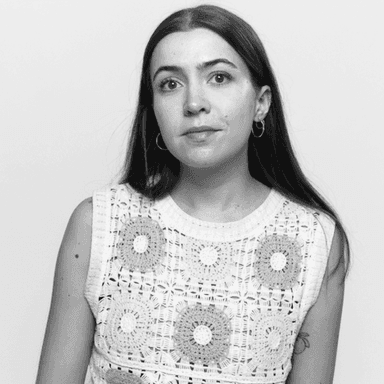
Two summers ago, Cat Cohen was at home in New York when her arm stopped moving. At the time, the comedian was in the process of packing for a trip to Scotland for the Edinburgh Festival Fringe. She was supposed to be returning with a new musical comedy hour, cheekily titled Come For Me, after winning the arts festival’s top comedy prize in 2019. Instead, Cat took herself to hospital. In a post shared on Instagram days later, the comic announced that she was having to cancel her Fringe run. “In a quirky twist of events, I suffered a mini-stroke last week,” she wrote.

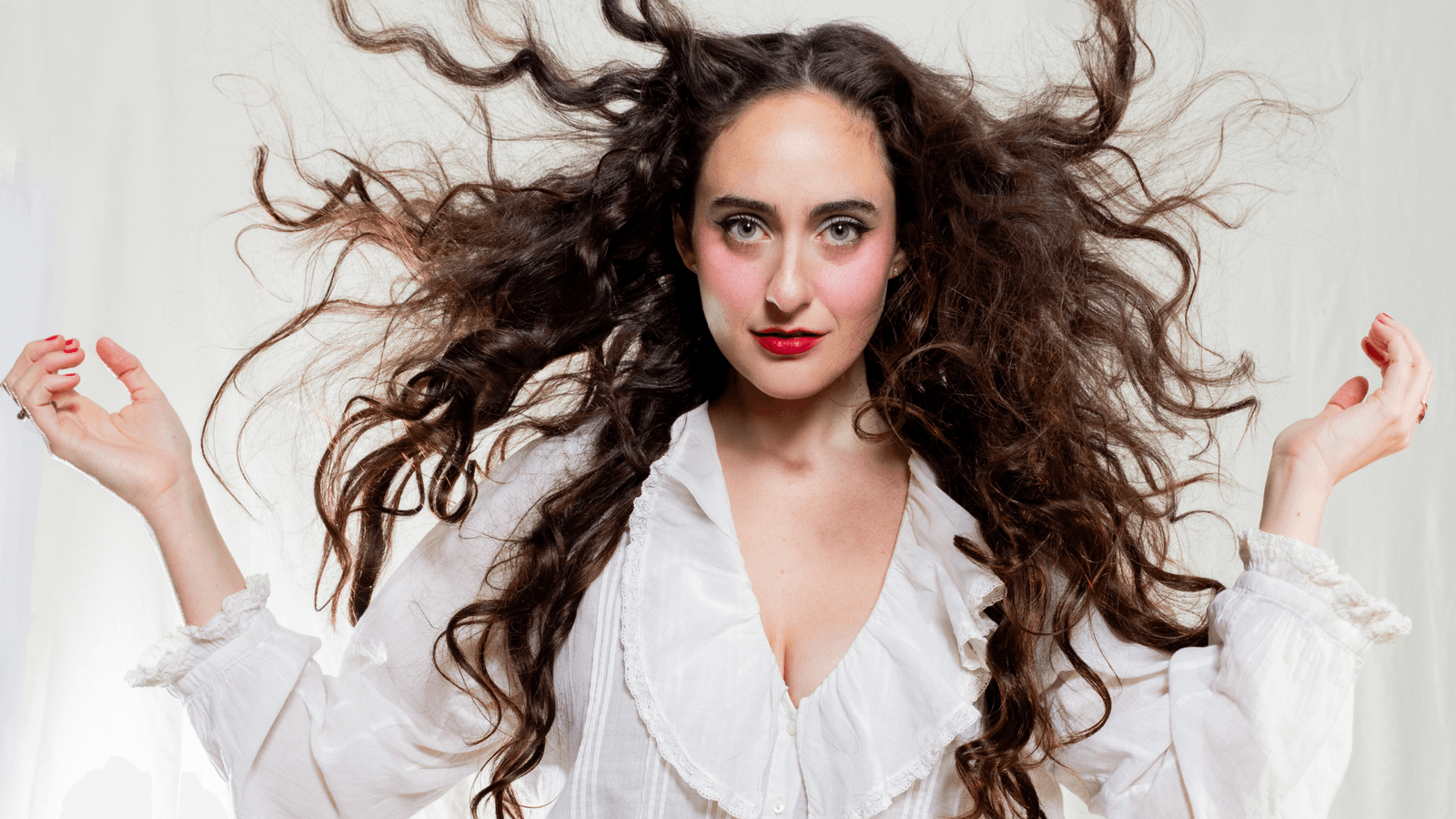
Telling the story now, Cat seems remarkably OK about the whole thing. We’re sitting in a sweaty room upstairs at London’s Soho Theatre, and she is patting cream blush into her cheeks as she explains to me how doctors learned she was born with a hole in her heart and needed subsequent surgery to fix it. In less than 90 minutes, she’ll retell this tale to the audience at one of her final sold out work-in-progress shows, Broad Strokes, before taking it to the Fringe – the world’s largest arts festival, which takes place every August in Scotland’s capital city. Only this time, there will be jokes and songs thrown in. “Everything is copy!” Cohen laughs, her voice a light sing-song trill.
For anyone who has seen Cat’s 2022 Netflix special or listened to her podcast Seek Treatment with Hacks writer Pat Regan, her embrace of that Nora Ephron-ism comes as no surprise. She’s always paired her unmistakable voice – part old Hollywood starlet, part lounge singer – with unflinching honesty about her life. Masturbation, dating apps, internet-fuelled existential dread: nothing’s off limits.
In Broad Strokes, Cat applies the same alchemy she’s known for – finding comedy in moments of chaos. There’s humour in being flattered when a doctor calls her a “young” stroke patient at 31, and in the revelation that her “close personal friend” Hailey Bieber (whom she has never met) shares the same congenital heart defect she once had. But beneath the punchlines, it’s clear she’s still processing the medical crisis that upended her life. By turning it into a musical comedy hour – and preparing to perform it daily for a month in Scotland – she’s not just entertaining; she’s working out how to move on.
In between eating her pre-show Joe & The Juice sandwich (“You have no idea how much this means to me,” she tells her producer, mid-bite) and quizzing me on whether she should be watching this season of Love Island UK, Cat talks turning heartache, quite literally, into art...
It’s been two years since your stroke. Did you always know you’d make comedy about it one day?
I will say, the only good thing was literally, as soon as they said I was going to be OK, I remember thinking, This is going to be an amazing show. I honestly started taking notes in my Notes app from the hospital bed. [I thought,] Whatever happens, I want to remember this experience because it’s so bizarre.
You’re about to go on stage for your last run of work-in-progress shows. How are they going?
It’s all coming together. This is the first time I’ve done a show where I’m telling one story. I think it’s fun, but it’s more difficult than just throwing together a bunch of funny shit and hoping that a theme emerges. So I’ve been asking more friends for feedback and asking for more notes, like, “Does that make sense to you?” I mean, it’s more rewarding as well. I think once I get there, I’ll definitely be more proud of it than I have been of other shows.
Did the stroke feel unexpected, or were there any subtle symptoms leading up to it?
I’ve always been a hypochondriac, so when something actually went wrong, I was like, Wait, am I a genius? I wasn’t feeling well, and then my arm stopped moving. I’ve always got migraines, but I went to the hospital and very quickly a brain scan showed that I’d had a mini stroke. Thankfully, there’s a procedure where they can close it up, so that’s what I had done. Now, I just take a little aspirin every day. Ultimately, it was so scary.
The mental impact must have been especially difficult to process – how did you begin to navigate that?
I was not doing well. Physically, I was healthy, but my mental health and my anxiety got way worse. I still have all these checking behaviours. I’m always asking my friends and family, “Am I being normal?” I thought I would have learned some grand lesson from it all, and I think I am now learning it, but it took a while. I wanted to get right back into it, so I went to Australia on all these blood thinners, which was insane. I think I took maybe six weeks off.
What has it been like to shape this experience into something performative, both in writing and onstage?
It’s definitely brought up some stuff, and there’s still some things I don’t like to think about. But the further I get from it, I’m like, OK, I’m fine, I’m fine, I’m fine. Hopefully, the more I talk about it, the less anxious it’ll make me. It’s new ground for me – as in, this is a departure, which was a very welcome departure. I’m not in a place where I’m wanting to talk about dating anymore; I’ve been in the same relationship [with actor and podcaster Brian Muller] for five years, so I was like, the well is dry at the moment. But then the universe gave me this amazing gift – this bizarre medical episode!
The Fringe is often described as the comedy world’s equivalent of summer camp – a place of intense creativity, camaraderie and growth. How does that atmosphere shape your experience as a performer?
When I’m there, I’m in such a weird monk bubble where I don’t leave my room. I’m so zeroed in on the show. I’ll always go out on one night on my birthday, and then towards the end, I’ll hang around more. But definitely [for] the first week or so, I’m completely alone. I kind of get off on it. It’s nice to be so focused. But it’s hard. I’m also scared!
The shock of performing in a tiny university classroom or in a space above a pub can be quite a shock to international comics playing the Edinburgh Fringe for the first time. How do you prepare your comedy pals for that?
I tell everyone [that] if they can, they should try and go before they do their show, just to see what the vibe is. It’s not glamorous; it’s very difficult. You never know who’s gonna be in the crowd – if anyone! I try and tell people only go if you’re extremely proud of your show and you’re desperate to share it, just because it is so hard, but it is also so rewarding. That’s also what’s so great about it: people who have no idea who you are will stumble in and hopefully become a fan. Like, lots of random old men telling me to speak slower. To be fair, I do need to speak slower.
Cat’s 3 Comedians To Watch At Edinburgh Fringe This Year...
1. Two Hearts
“I love Two Hearts – a musical comedy duo from New Zealand – they’re the best,” says Cat. The duo blend clever wit with heartfelt storytelling and their new show, Don’t Stop Throbbing, promises an electrifying mix of original songs that tackle the chaos of the world with both humour and heart is “apparently amazing.”
2. Steven Phillips-Horst
Steven is an emerging talent in the comedy world, known for his sharp writing and engaging podcast work. “I’ve known Steven forever,” says Cat. “He has a podcast with our friend Lily Marotto called Celebrity Book Club, and they are so funny, so smart. He’s doing [the] Fringe for the first time. I haven’t seen his new show, but he’s an amazing writer, and I think people are going to love it.”
3. Sikisa
Sikisa is quickly making a name for herself on the UK comedy circuit with her dynamic stage presence and sharp comedic timing. Her high-energy sets fearlessly tackle tough topics with wit and honesty. “Sikisa has opened for me on my UK tour a bunch – she’s just such a powerhouse. I’m a huge fan,” says Cat.